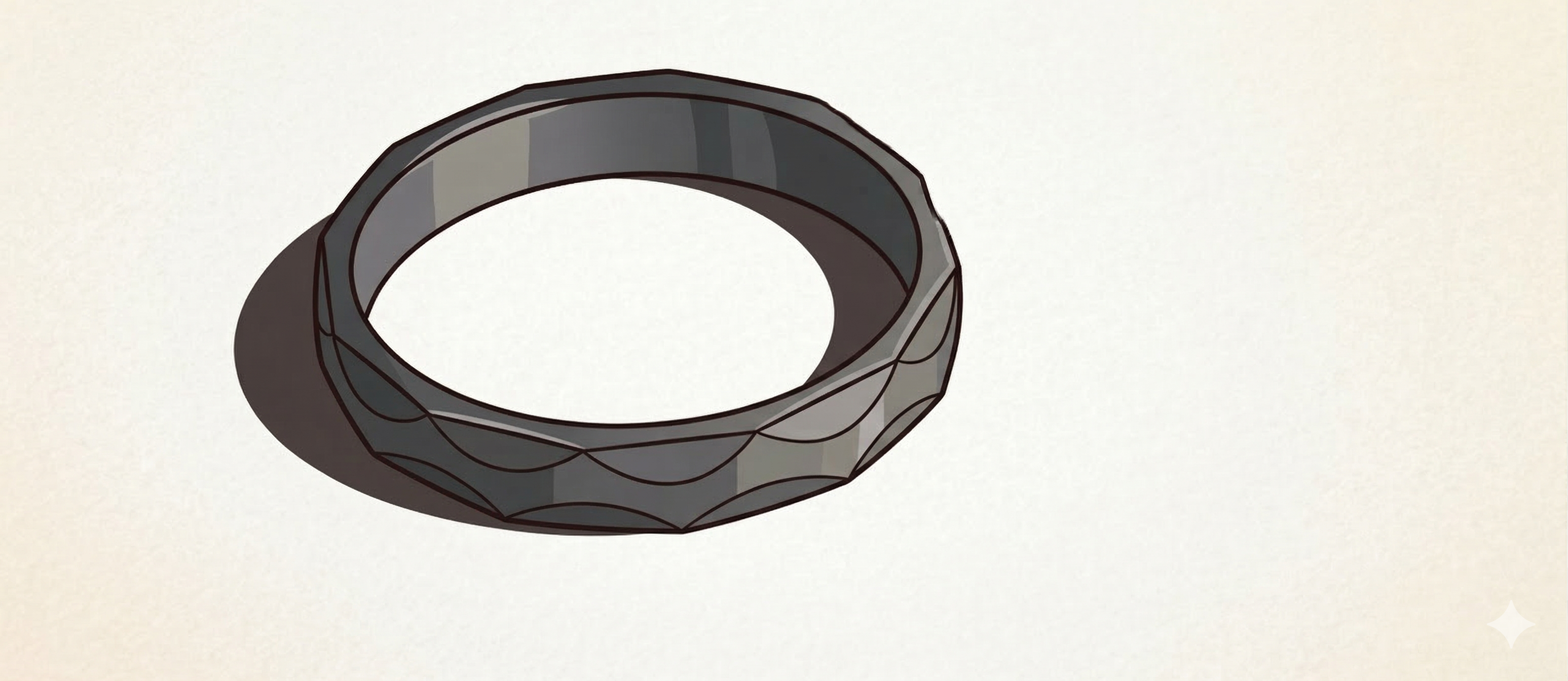
The Ring
If you've ever shaken hands with a Canadian engineer, you might have seen it. A small iron ring on the pinky finger of the working hand.
Most people don't notice. Engineers always do.
It's the first thing we recognize about each other, a quiet signal that says I took the same oath you did. I've been in coffee shops in San Francisco, conference rooms in Miami, on the slopes in Tahoe, even traveling in Europe, and every time I catch that glint of iron on someone's hand, I know something about them before we've exchanged a single word. There is an immediate, unspoken connection.
We carry the same weight.
Fifteen Seconds
In 1907, the Quebec Bridge collapsed during construction. Seventy-five workers died. The cause was an engineering failure. The lead engineers had underestimated the load on the structure and the bridge fell in fifteen seconds. The inquiry that followed found that the disaster was entirely preventable. The engineers in charge had made errors in judgment, and people who trusted their work paid for it with their lives.
The collapse became a defining moment for the profession in Canada. Engineering was more than just problem-solving. It carried consequence.
When you got it wrong, structures fell and people died.
Someone Is on the Other End of This
In 1922, seven Canadian engineers approached Rudyard Kipling, the poet, and asked him to write a ceremony. What he produced was called the Ritual of the Calling of an Engineer, and it has been performed in private ever since. Every graduating engineer in Canada goes through it. I went through it.
I won't describe the details. The ceremony is meant to stay in the room. What I can say is that it centers on an obligation. A commitment to the public above everything else, to practice with humility, and to remember that the work you do as an engineer lands on other people.
The ring is placed on your pinky finger so that it drags across every surface you write on, every blueprint you sign, every document you approve.
The story goes that the original rings were forged from the iron of the collapsed Quebec Bridge itself, so every engineer would literally wear the failure on their hand.
It's a physical reminder: someone is on the other end of this.
The Same Iron, the Same Oath
The tradition matters more when you consider what Canadian engineers have actually built.
Geoffrey Hinton laid the foundation for modern deep learning at the University of Toronto. The transformer architecture behind every large language model came in part from Google Brain's Toronto office. The University of Waterloo produces more startup founders per capita than almost any school on Earth.
Canada punches absurdly above its weight in engineering talent, and the ring is the thread that connects it all.
A Waterloo grad at a Bay Area startup and a UofT researcher publishing at NeurIPS wear the same iron on the same finger. They took the same oath. The tradition doesn't care where you end up. It cares how you carry yourself when you get there.
Functional, Efficient, Profitable, and Dead
In 1996, an architect named Christopher Alexander gave a keynote at OOPSLA, the premier software engineering conference of its era, and begged the engineers in the room to understand something.
He told them they had more power to shape the built environment of human life than any other group of people in history. That the things they built were becoming the structures people lived inside. And he pleaded with them to build living structure: things that generated wholeness, that made the world more alive rather than less.
He told them this was the most important responsibility any group of builders had ever been handed, and that if they failed, the world would fill up with dead structures. Functional, efficient, profitable, and dead.
That was thirty years ago. Alexander was talking about desktop software. Websites. Applications that organized your calendar and your contacts.
Today we are building systems that people trust to think for them.
The New Bridges
We are building the infrastructure of thought. The systems we ship shape how people reason, what they believe, how they make decisions, and increasingly, what they create.
An algorithm that buries the truth under what gets clicks is a Quebec Bridge.
A language model that hallucinates medical advice is a Quebec Bridge.
The structure fails, and the people who trusted it pay the cost.
The ring on my finger was designed for a world where engineers built physical things. Bridges, buildings, machines. The obligation was clear: if you cut corners, the structure falls and people get hurt. That obligation has not changed. The structures have. We are the ones building the bridges now, and the bridges are made of language and logic and data, and they are holding up the weight of millions of people's trust every single day.
Alexander was right 30 years ago. We have more power to shape how human beings experience the world than any other group of people alive. And the question the ring asks every engineer, every time it catches on a surface, is the same one it has asked since 1922.
Are you building something that holds?